
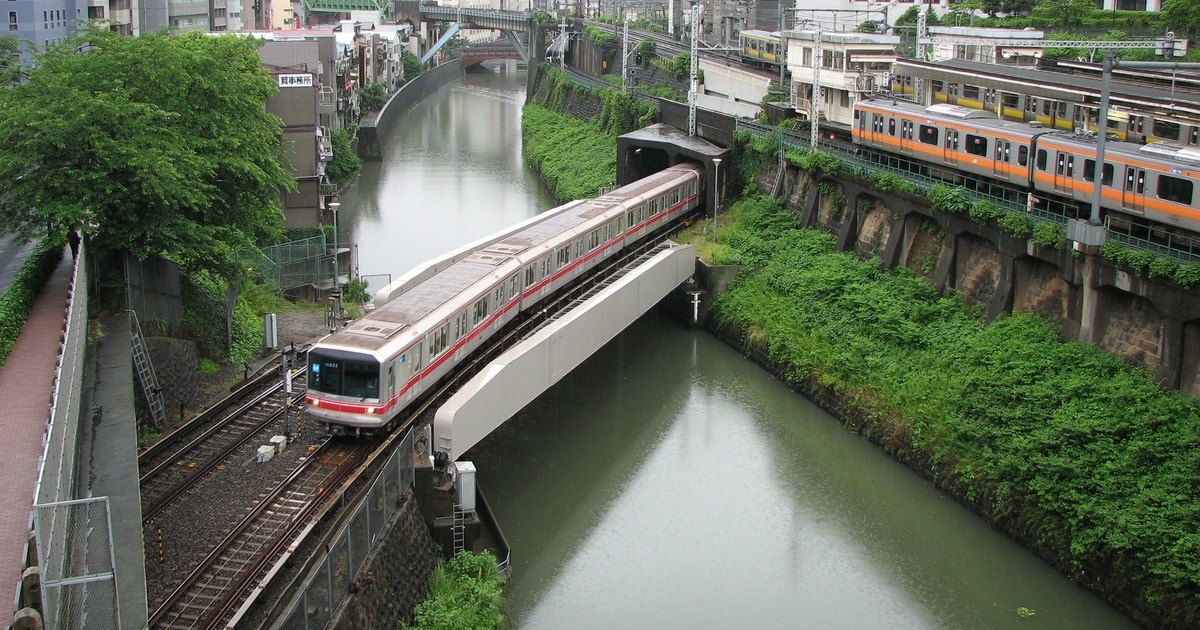
Thank you, as always, for using Halal Gourmet Japan. This time we are looking at something every trip in Japan depends on: getting around.
This article contains affiliate links. If you book through them, Halal Gourmet Japan may earn a commission at no extra cost to you.
The first look at a Tokyo rail map can be overwhelming. But for the areas most travelers actually visit, there is not much to memorize. Carry one IC card, type your destination into a map app, and you have covered almost every trip you will make.
This article narrows it down to five things worth knowing before you start moving around Tokyo, plus a section on fitting prayer and meals into your day. Getting from the airport into the city, and finding places to eat around major stations, will be covered in separate articles.
1. Get one IC card
You ride trains and buses in Tokyo by tapping an IC card. There is no ticket to buy and no fare to calculate. On buses you tap as you board, and on some routes you tap again as you get off. The same card also pays at convenience stores, vending machines, and coin lockers.
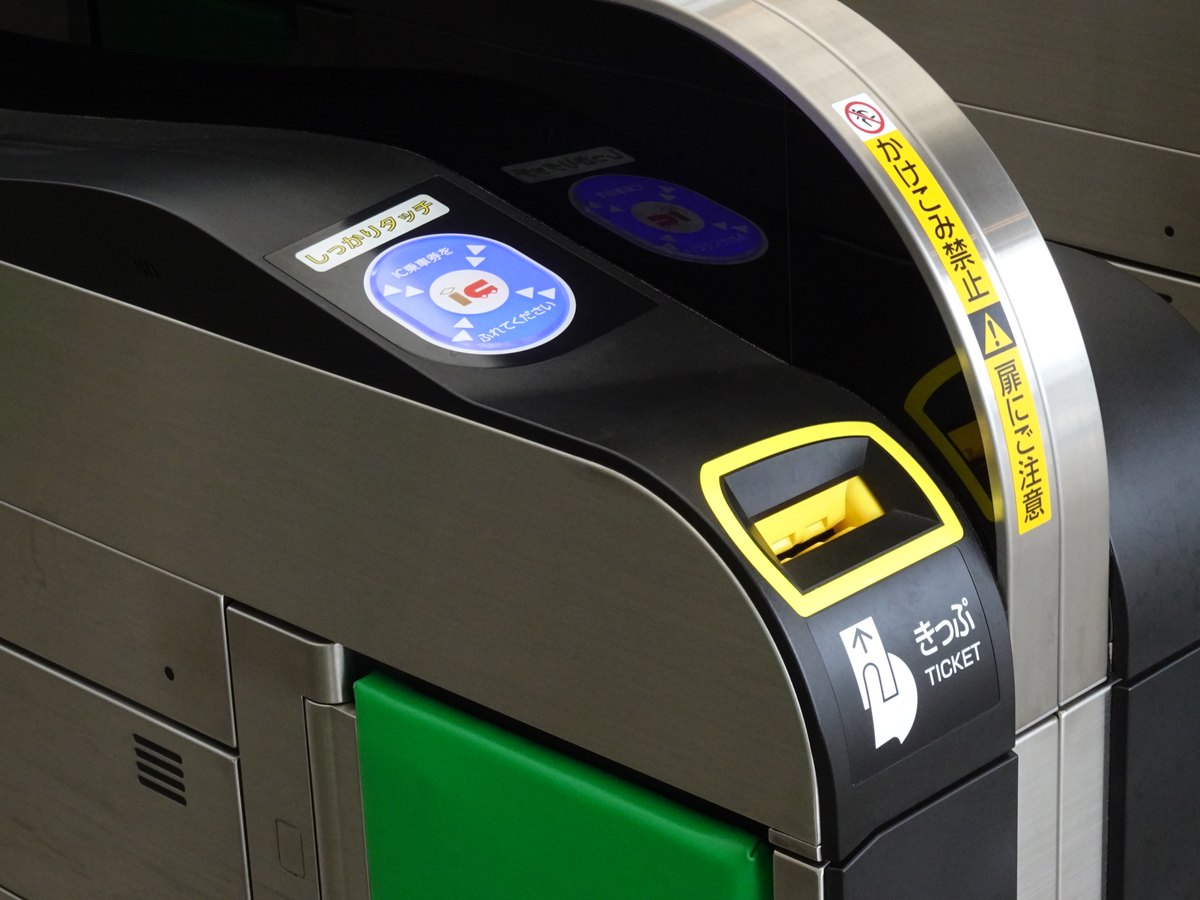
Visitors have four main options.
| Card | Valid for | Deposit | Balance refund | Top up with |
|---|---|---|---|---|
| Welcome Suica (card) | 28 days including the day of purchase | None | No | Cash only (up to 20,000 yen) |
| Welcome Suica Mobile (iOS app) | — | None | — | Credit card registered in Apple Pay |
| TOURIST PASMO | 28 days from the day of purchase | — | No | — |
| Regular Suica / PASMO (non-personalized) | No expiry | 500 yen | Yes | Cash |
Welcome Suica is issued by JR East for visitors to Japan. It needs no deposit, and you do not have to return it when it expires. In exchange, the remaining balance is not refunded, so top up only what you expect to spend. It comes in amounts from 1,000 to 10,000 yen and is sold at dedicated vending machines at Narita and Haneda airports, and at JR EAST Travel Service Centers including Tokyo, Shinjuku, Shibuya, Ikebukuro, and Ueno stations. (Source: JR East, retrieved September 8, 2026)
Welcome Suica Mobile is an iOS app. You can top it up with a credit card registered in Apple Pay, so you can start using it without Japanese cash in hand. If you would rather pay with a card issued outside Japan, this is the easier route. (Source: JR East, retrieved September 8, 2026)
TOURIST PASMO is the visitor version of PASMO. It is valid for 28 days from the day you buy it, and its balance is not refunded either. (Source: PASMO, retrieved September 8, 2026)
Suica and PASMO work the same way. Whichever one you hold, you can tap it on JR lines, subways, private railways, and buses without thinking about which company runs them.
Station coin lockers take the same card. At major stations in peak season, though, finding a free one can take a while. On days when you are moving with large bags, one option is to reserve space in advance with a luggage storage service such as Bounce, which uses spare room in shops around the city.
2. Remember that different companies run different lines
Tokyo’s railways are not operated by a single company. Three operators cover most of what travelers use.
- JR East — the operator of the Yamanote Line, the loop through central Tokyo that stops at most of the major hubs
- Tokyo Metro — nine subway lines
- Toei Subway — four subway lines
Beyond these, several private railways run out to the suburbs.
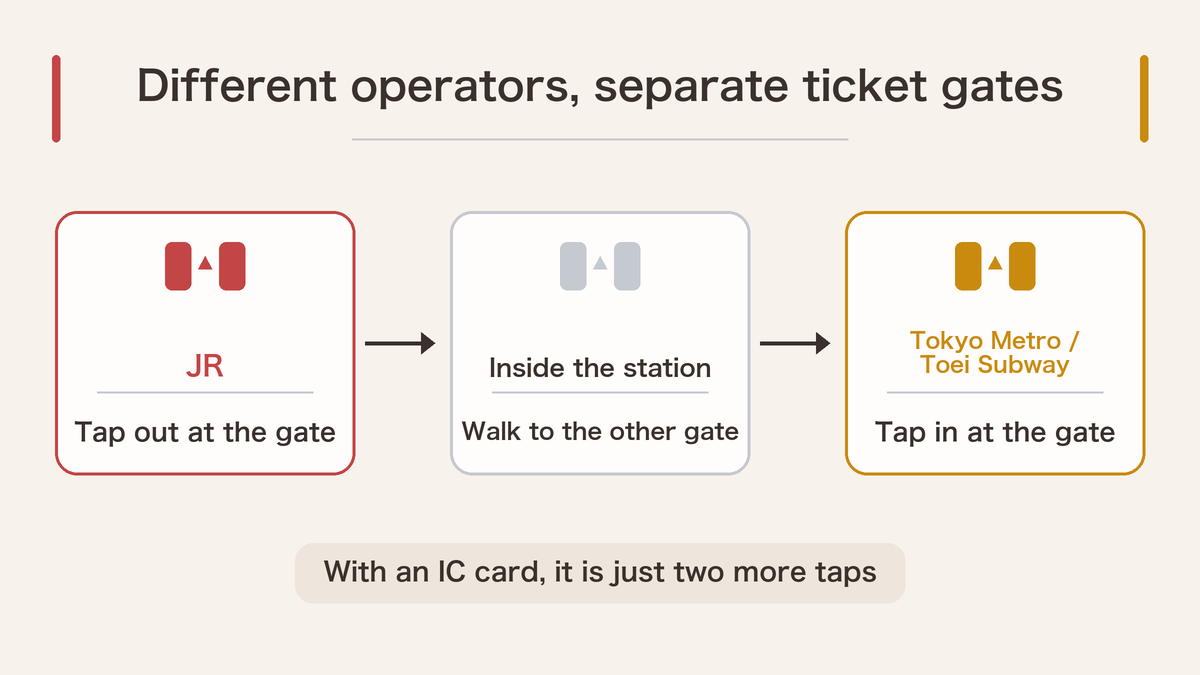
Because the operators are separate, the ticket gates are sometimes separate too. Changing from a JR line to a subway can mean tapping out through one set of gates and tapping in through another. With an IC card this is just two more taps, but it helps to know that passing through gates inside a single station is normal.
Lines and stations are labeled with letters and numbers. Stations on the Ginza Line, for example, are numbered with a “G”. The same code appears on the route map and on the signs in the station, so you can follow the letter and number even if you cannot read the station name.
3. Let a map app plan the transfers
You do not need to work out which line to take. Enter your destination in Google Maps and it will give you the lines, the transfer stations, the fare, and the travel time. Trains here run to the timetable, so the times you see are the times you get.
That does mean you want a connection for the whole trip. Services such as Sakura Mobile offer SIM cards, eSIMs, and pocket Wi-Fi you can pick up at the airport.
One thing worth planning around: the last train is earlier than you might expect. Most lines finish sometime after midnight. If you are out late, check the return time before you head out.
4. Consider the Tokyo Subway Ticket on heavy subway days
This pass gives unlimited rides on Tokyo Metro and Toei Subway. Visitors from overseas are eligible to buy it.
| Type | Adult | Child |
|---|---|---|
| 24-hour | 1,000 yen | 500 yen |
| 48-hour | 1,500 yen | 750 yen |
| 72-hour | 2,000 yen | 1,000 yen |
(Source: Tokyo Metro, retrieved September 8, 2026)
The clock starts when you first use it, not at midnight, so a pass activated in the evening runs until the same time the next day. On a day with four or five subway trips it pays for itself. Note that JR lines are not included, so on a day built around the Yamanote Line, paying by IC card can work out cheaper.
You can buy it from the Tokyo Metro website. Travel booking sites such as Klook also carry it. Prices and collection methods differ between sellers, so compare before you buy.
5. Learn a few of the on-board customs
Trains in Tokyo are quiet. A few habits will help you blend in.
- People do not take phone calls on board. Messaging is fine, but most people step onto the platform or leave the station to make a call
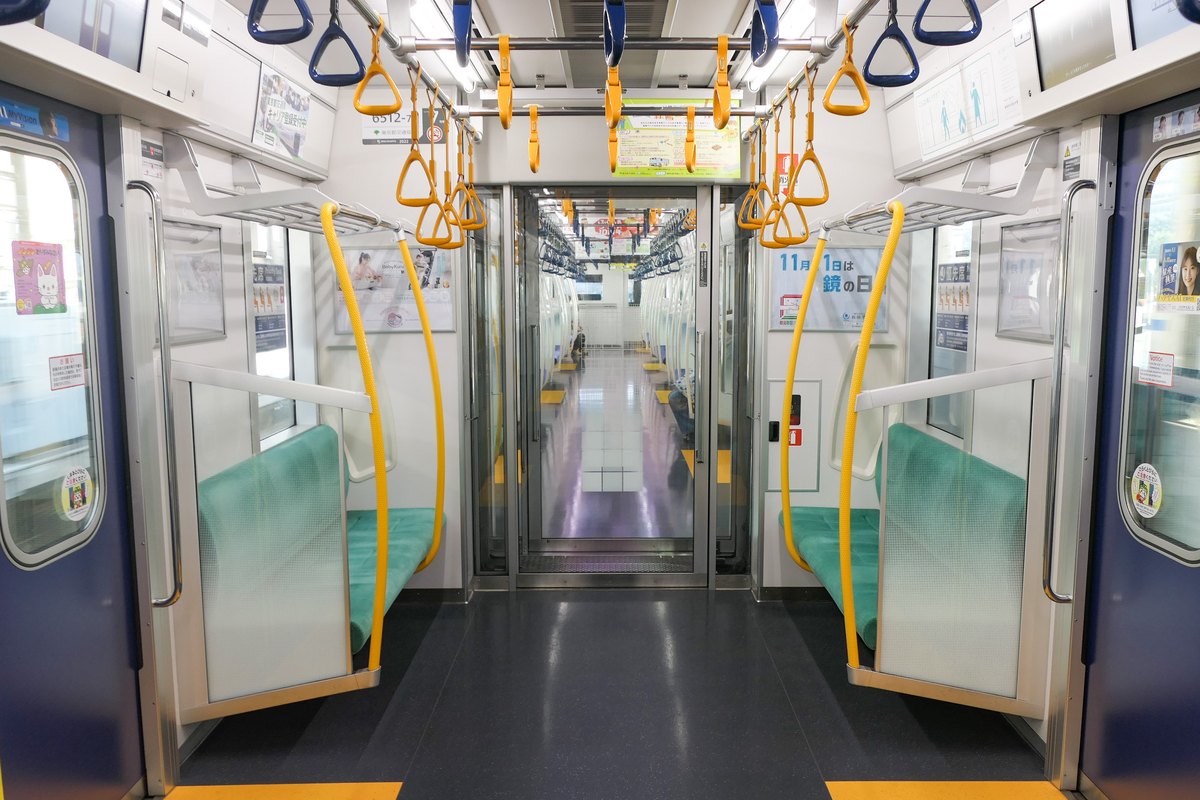
- Near the priority seats, many passengers stand rather than sit, so the seats stay free for those who need them
- Passengers getting off go first. Wait to the side of the door and board once everyone has stepped out
- Eating a meal on a commuter train is uncommon. Drinks are fine
Buying food inside the station
Tokyo stations often have soba shops, cafes, bakeries, and convenience stores inside the gates. Between transfers, you may well want to pick something up.
What goes into food served at a counter is not something you can tell by looking. Japanese stock and seasonings in particular can contain things you would only catch by reading the label.
For packaged food — the kind you find in a convenience store — you can check it with Halal Lens in the Halal Gourmet Japan app. Scan the product barcode or the ingredient label with your phone, and it checks the ingredients against a database of more than 18,000 entries, returning one of three results: Muslim Friendly, Be Careful, or Forget It. It covers almost all processed foods sold in Japan, and shows results in several languages including English and Indonesian.
We wrote more about it in What is Halal Lens?.
As set out in the assessment criteria, it does not cover ingredients that Japanese labeling rules do not require to be disclosed, nor cross-contamination during manufacturing. What Halal Lens gives you is information based on the ingredient list, so the final call is yours to make against your own standards.
Fitting prayer and meals into your day
When you plan an itinerary, the question is often less about travel time itself and more about where you will be when prayer time comes.
Halal Gourmet Japan lists mosques and prayer spaces by prefecture. For Tokyo, start here.
Looking these up before you leave, for the area you are heading to that day, makes it easy to plan a stop along the way.
The same goes for meals. You can browse listings across the city on the Tokyo restaurant list, and restaurants with a prayer space on site are gathered under restaurants with a prayer space. Eating and praying in one place means one less trip across town.
What each restaurant offers — certification, ingredients, kitchen practice, and so on — is described on its own listing page. Please check the listing to see whether it meets your own standards.
To wrap up
Carry one IC card and let a map app do the routing. Those two things cover almost all of Tokyo. Beyond that, consider a subway pass on days when you will ride a lot, and keep the last train in mind.
Once you know which part of the city you are heading to, look up the mosques, prayer spaces, and restaurants nearby first. It makes the rest of the day fall into place. Have a good trip.
Image credits
- Featured image (Ochanomizu): photo by sodai gomi / CC BY 2.0 / Wikimedia Commons
- Ticket gate: photo by RuinDig/Yuki Uchida / CC BY 4.0 / Wikimedia Commons
- Train interior (priority seats): photo by MaedaAkihiko / CC0 / Wikimedia Commons
- Ticket gate diagram: created by Halal Gourmet Japan
This article was written by the Halal Gourmet Japan team. On Halal Gourmet Japan, you can search for halal-friendly restaurants and prayer spaces all over Japan. The service is also available as an app (iOS / Android).

After seeing his Muslim friends struggle to dine out in Japan, he founded Halal Gourmet Japan, a restaurant search service for Muslims, and has been running it for more than a decade since its launch in 2014. He also co-founded Food Diversity Inc. (formerly Halal Media Japan; he has since stepped down), and has deep expertise in halal support for restaurants and Muslim-oriented inbound tourism. Halal Gourmet Japan is one of Japan’s largest halal-friendly restaurant search services, used in more than 140 countries, introducing halal-friendly restaurants and prayer spaces across Japan in multiple languages.


