
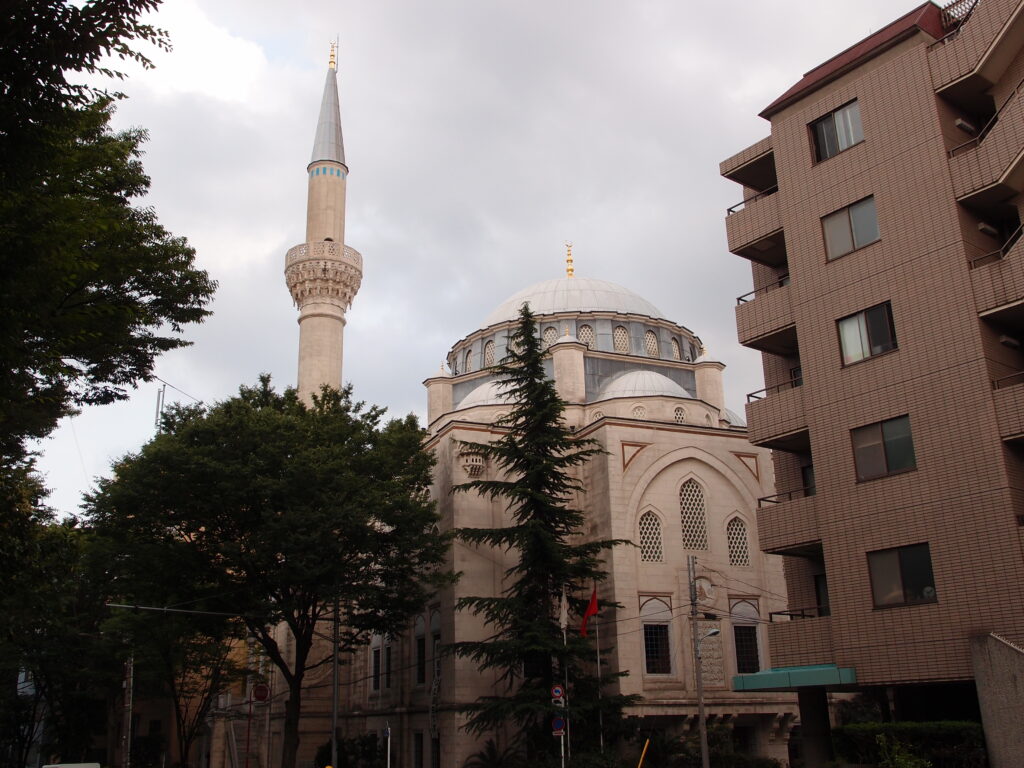
Near Yoyogi-Uehara Station in Shibuya, Tokyo, a white dome and a minaret rise above the houses. This is Tokyo Camii and Diyanet Turkish Culture Center.
This guide covers how Tokyo Camii came to be, what to see inside, and what to know before you go to pray or visit.
How Tokyo Camii came to be
Tokyo Camii began as a prayer hall built in 1938.
It was built by Turkic Muslims from Kazan who had fled the Russian Revolution to Japan. They built it on this site in Shibuya with the cooperation of the Japanese government.
For many years, the prayer hall was a spiritual home for Muslims living in Japan. The building grew old and was taken down in 1986.
Donations to rebuild it were collected from all over Turkey. About 100 engineers and craftsmen came from Turkey to build it.
The present Tokyo Camii opened in 2000. It was designed by Muharrem Hilmi Şenalp, a leading figure in modern Turkish religious architecture.
What to see
Tokyo Camii is built in the Ottoman style. Step into the prayer hall and you are surrounded by the patterns that cover the dome and by colorful stained glass.
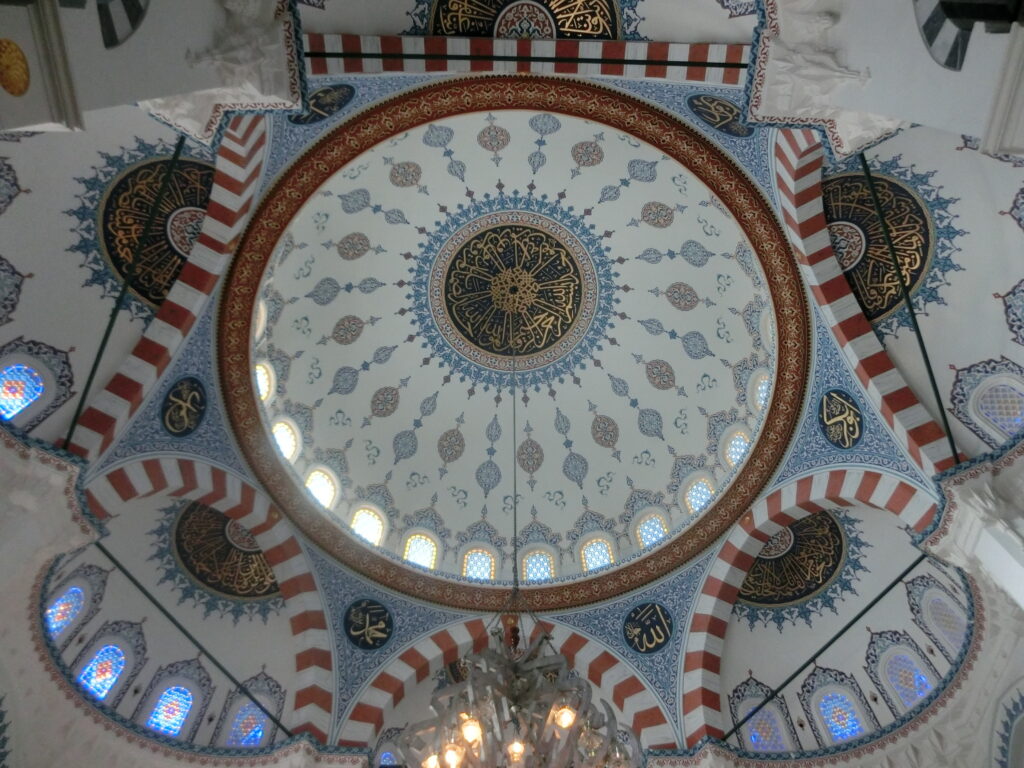
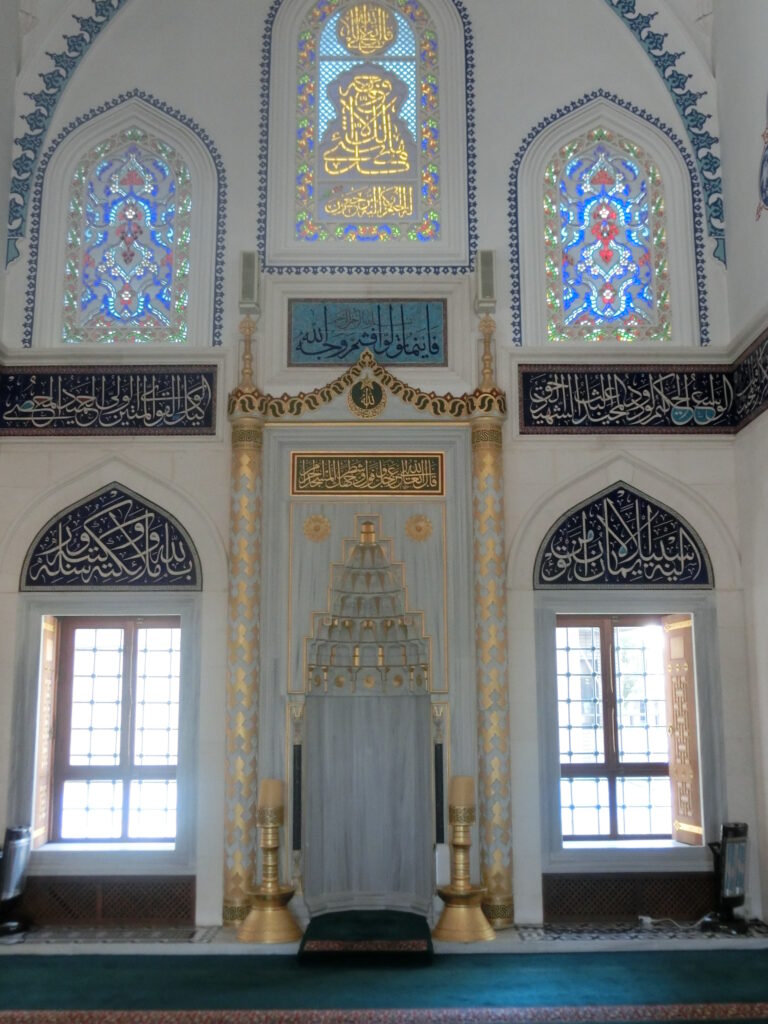
At the front is the mihrab, which shows the direction of Mecca. Praying among the handiwork of Turkish craftsmen, without leaving Tokyo, is what makes a visit to Tokyo Camii special.
The Turkish Culture Center next door was completed in 2018. It displays the first Quran ever printed in Japan, published in 1934.
For those coming to pray
Tokyo Camii has wudu facilities with hot water. Wi-Fi is also available.
The monthly prayer timetable is posted as a PDF on the official website. Friday congregational prayer is held around midday.
The upper floor of the prayer hall is for women only, and men may not enter.
Opening hours and guided tours
Tokyo Camii is open from 10:00 to 18:00, all year round (as of November 2026). Visitors of all faiths are welcome, and individuals and small groups do not need a reservation.
On Fridays, because of the congregational prayer, general visits start in the afternoon. Please check the starting time on the visitor information page on the official website.
On Saturdays, Sundays and public holidays, there is a guided tour in Japanese from 14:30. It takes about 45 to 60 minutes and needs no reservation.
The meeting point is the entrance on the ground floor. There is no guided tour when a public holiday falls on a Friday.
Groups of five or more who would like a guided tour at another time can apply through the booking calendar on the official website.
Dress code and manners in the prayer hall
The prayer hall is a sacred place where worshippers pray. Both men and women should wear modest clothing.
Women are asked to cover their hair with a scarf before entering the prayer hall. A long-sleeved top and an ankle-length skirt or trousers are a good guide.
If you do not have a scarf, you can borrow one. Scarves and long, body-covering coats (abayas) are available to borrow next to the main entrance of the prayer hall.
Take off your shoes before entering the prayer hall and put them in the shoe racks on either side of the entrance. Please keep quiet inside, and if a prayer is in progress, sit at the back.
Only personal photos taken with a smartphone are allowed. Do not photograph people who are praying or other visitors, and if you wish to take photos inside the prayer hall, ask for permission in advance.
The halal market
On the ground floor, a halal market links the mosque and the Turkish Culture Center. The official website describes it as a place to buy halal products that are hard to find in Japan.
It also sells food from Turkey and other countries, and visitors who are not Muslim stop by too. It is open until 19:00 and closes for a short while during prayers.
Getting there
The nearest station is Yoyogi-Uehara, on the Odakyu Line and the Tokyo Metro Chiyoda Line, about a five-minute walk away. Head to Inokashira-dori and pass under the elevated Odakyu Line tracks.
From Shinjuku Station, take the Odakyu Line to Yoyogi-Uehara. From Shibuya Station, take the Hanzomon Line or the Ginza Line to Omote-sando, then change to the Chiyoda Line for Yoyogi-Uehara.
- Name: Tokyo Camii and Diyanet Turkish Culture Center
- Address: 1-19 Oyama-cho, Shibuya-ku, Tokyo 151-0065, Japan
- Listing on Halal Gourmet Japan: Tokyo Camii
- Official website: Tokyo Camii and Diyanet Turkish Culture Center
Other prayer spaces and where to eat nearby
For other mosques in the city, see our list of mosques in Tokyo. Our guide to finding a mosque or prayer space in Japan explains how to find prayer spaces near you while you travel.
For meals, see our guide to places to eat in Shinjuku and Shibuya, and our guide to halal-friendly food in Tokyo.
To wrap up
At Tokyo Camii, you can learn about the history of Muslims who made their lives in Japan and experience Turkish architecture and culture in one visit.
It is a place we recommend to Muslim travelers looking for a prayer space in Tokyo, and to anyone who would like to see a mosque. Before you go, check the opening hours and the guided tour schedule on the official website.
Image credits
- Featured and opening image (exterior of Tokyo Camii): Guilhem Vellut / CC BY 2.0 / Wikimedia Commons
- The dome ceiling: Abasaa / Public domain / Wikimedia Commons
- The mihrab in the prayer hall: Abasaa / Public domain / Wikimedia Commons
This article was written by the Halal Gourmet Japan team. On Halal Gourmet Japan, you can search for halal-friendly restaurants and prayer spaces all over Japan. The service is also available as an app (iOS / Android).
After seeing his Muslim friends struggle to dine out in Japan, he founded Halal Gourmet Japan, a restaurant search service for Muslims, and has been running it for more than a decade since its launch in 2014. He also co-founded Food Diversity Inc. (formerly Halal Media Japan; he has since stepped down), and has deep expertise in halal support for restaurants and Muslim-oriented inbound tourism. Halal Gourmet Japan is one of Japan’s largest halal-friendly restaurant search services, used in more than 140 countries, introducing halal-friendly restaurants and prayer spaces across Japan in multiple languages.


